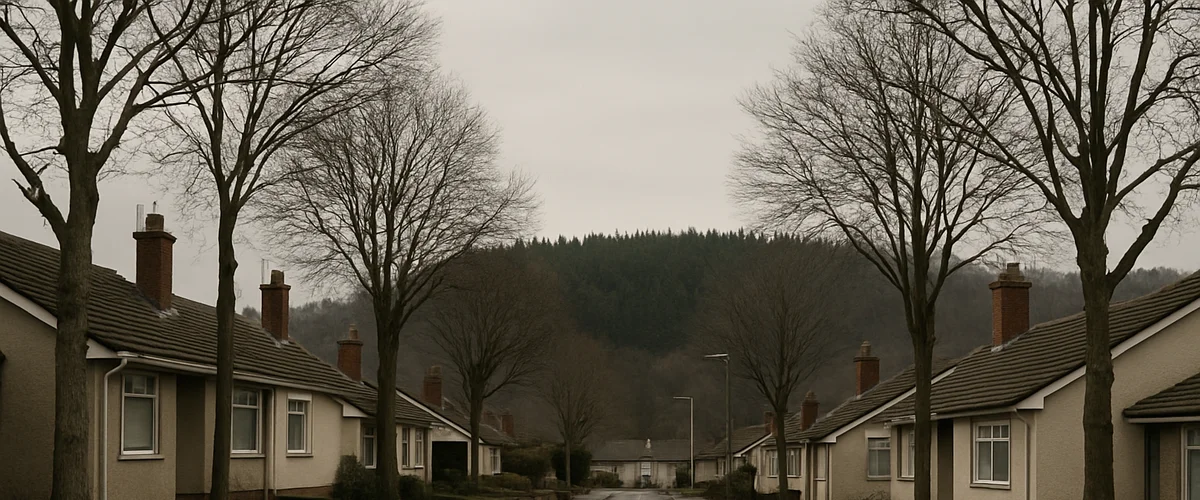
A city in a basin, built on hills, with a housing stock shaped by one night in 1972.
It is built on hills. Rapid City climbs out of its basin in every direction, and the two sides of the same house can be at completely different heights from wherever a ladder can safely stand. A downhill elevation on a slope lot is often a full storey further from the ground than the front of the house. Access drives our pricing here more than roof size does, and it is why a photograph from the street gets you a number that holds.
It sits in a bowl. Cold air pools on the valley floor under settled winter high pressure while warmer air sits above it. That inversion is the single most common cause of spilling we diagnose in town, and it is weather rather than a fault - which is exactly why it gets misdiagnosed and mis-sold. There is more on that on the draft page for Rapid City.
Its housing has a cohort. After the flood of 9 June 1972 the city cleared the floodway along Rapid Creek and turned it into parkland, razing or relocating the houses that stood there. A great deal of what surrounds that corridor went up or was rebuilt inside a very short window, which means their chimneys share an age, a design and a set of predictable findings.
Sweeping with a Level 1 inspection on every visit. Relining where thermal cycling has opened the joints between clay tile sections - the mechanism these hills are famous for. Draft correction for fireplaces that spill, which in this basin is more often the weather than the chimney.
Rapid City runs through the week rather than on set route days, so most requests get same-week attention outside the October and November peak. Sturgis and Box Elder have fixed days, which is how they stay at the same price without a travel surcharge.
Age of the house, what is connected to it, and a photo from the street if you have one.
Rather talk it through
Same-week scheduling most of the year. A photo from the street gets you a firm number faster.