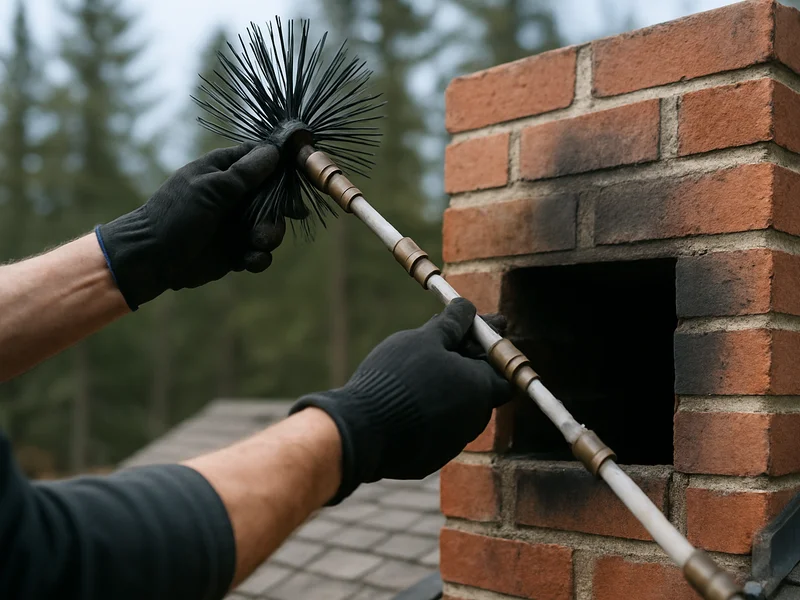
Half a million visitors in August, and a stove operated by people who have never seen one.
Sturgis has an unusual relationship with its own housing stock. For most of the year it is a town of around seven thousand in the northern foothills. For ten days in August it is not, and a substantial share of the housing here exists partly or wholly as short-term rental.
That matters for chimneys in a way it does not elsewhere on our route. A wood stove in a rented property is operated by a sequence of people who have never used one - a fire built too big, a damper left shut, unseasoned wood off the pile out back, doors left open. None of that is negligence. It is just what happens when the operator changes every few nights.
The result is deposit that does not match the volume burned, and it is why we ask whether a property is let before quoting an interval.
The practical constraint: nobody wants a technician on the roof in rally week, and access in and around town is impossible anyway. So the useful windows here are late spring, once the season is over and before the summer lets begin, and late September into October, after the summer and before the heating season.
Of the two, late September is the one that matters, because it puts the flue into winter clean and because whatever the summer produced is still fresh enough to read. We book Sturgis on set route days weekly and those weeks fill first.
Two things worth doing beyond the sweep, and neither costs anything. Put the damper position in writing where a guest will see it, because a closed damper is the single most common cause of a smoke-filled rental living room. And keep the wood dry and separate from the decorative stack - guests burn what is nearest the door.
That single answer changes the recommended interval more than anything else you can tell us.
Rather talk it through
Say whether the property is let - it changes the interval and what we look for.