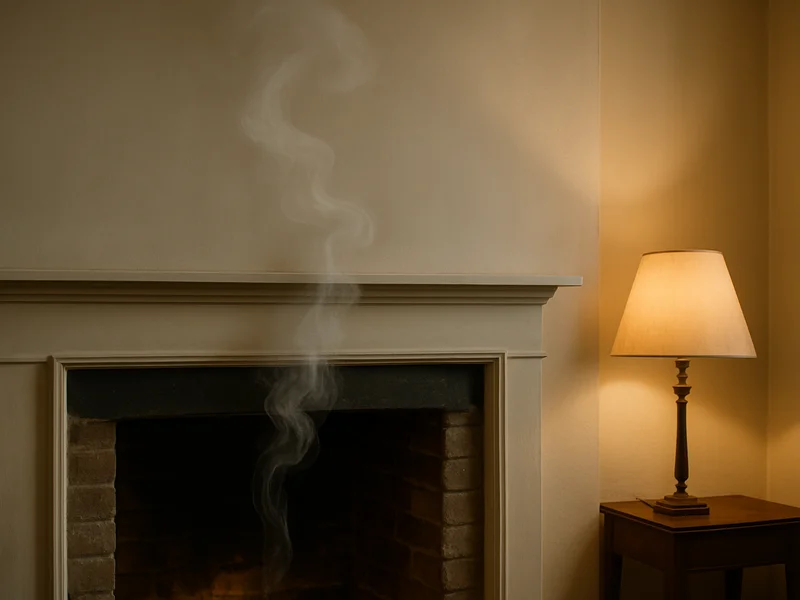
The addition went up and nobody moved the chimney.
A chimney has to terminate at least two feet above anything within ten feet of it, and at least three feet above the roof where it penetrates. That is not decoration. Below that, the moving air over a roof creates a pressure zone at the termination that pushes down the flue instead of drawing across it.
Almost every house that satisfies this on the day it was built continues to satisfy it, with one exception: somebody adds a room.
The foothills housing here has been extended, and extended again, more than anywhere else on our patch. Some of it is rally economics - an extra bedroom pays for itself in a week each August. Some of it is simply what happens to a small old house that a family stays in for forty years.
The addition goes on the sheltered side, its roof is higher than the original because the ceilings are, and the chimney that used to stand clear now sits in the lee of a wall ten feet away. Nothing about the chimney changed. Its situation did.
The symptom is characteristic and it is the opposite of the Rapid City one: it spills when the wind blows, from particular directions, and behaves perfectly on still days. If a neighbour's outbuilding or a grown tree line has appeared since the house was built, the same applies.
Usually an extension of the flue to clear the obstruction - $600 to $1,500 depending on height, access and whether the existing stack can carry it. Occasionally a properly specified wind-directional cap does it for less, and we will say when that is genuinely enough rather than a fudge.
What we measure first is which direction it spills from. Bring that observation to the call and you have saved us both a visit.
Which direction, and whether anything has been built or grown near the house since.
Rather talk it through
That one observation narrows the diagnosis more than anything we can measure on a calm day.